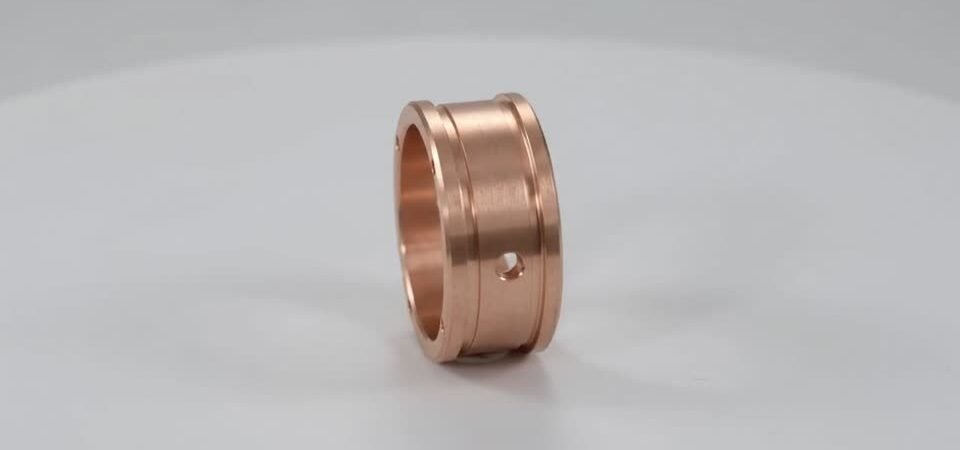
Bronze bushes and plain bearings are simple parts, but the alloy makes a big difference to how long they last. The right choice depends on three things: load, sliding speed and lubrication.
General purpose: SAE 660 (C93200)
About 83% copper with 7% tin, 7% lead and 3% zinc. It machines easily, tolerates some misalignment and dirt, and suits most machinery bushes under moderate load. If you are unsure, it is the usual starting point.
Poor lubrication: high-leaded bronzes (C93700, C93800, C94300)
More lead gives the bearing surface better embeddability and some self-lubrication, so these alloys cope better when oil supply is limited or contaminated. They are softer, so they suit lower loads.
High load with good lubrication: phosphor and tin bronzes
Higher tin and a little phosphorus make a harder, stronger bronze for gears, worm wheels and heavily loaded bushes running against hardened shafts with reliable lubrication.
Very high load, slow speed, corrosion: aluminum bronze (C95400)
Aluminum bronzes have roughly twice the strength of leaded bronzes and resist wear, shock and seawater. They suit heavy, slow-moving equipment and marine bearings, but need a hardened shaft and good lubrication.
How bushes are made
Round parts are usually centrifugally or continuously cast for a dense, sound structure, then machined to size with grooves, flanges and oil holes.
Send us the shaft size, load, speed and lubrication method and we will recommend the alloy and quote the finished bush.